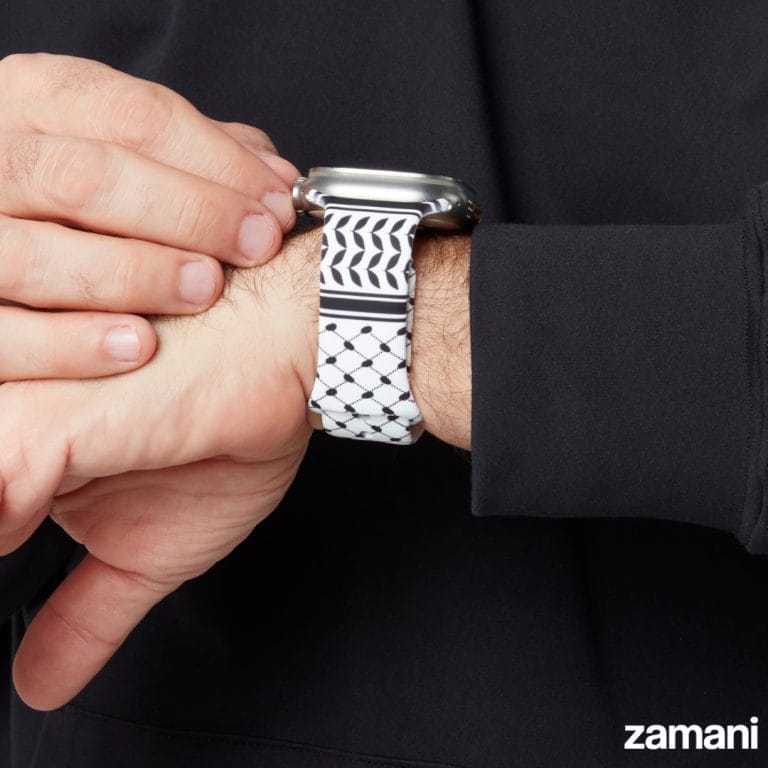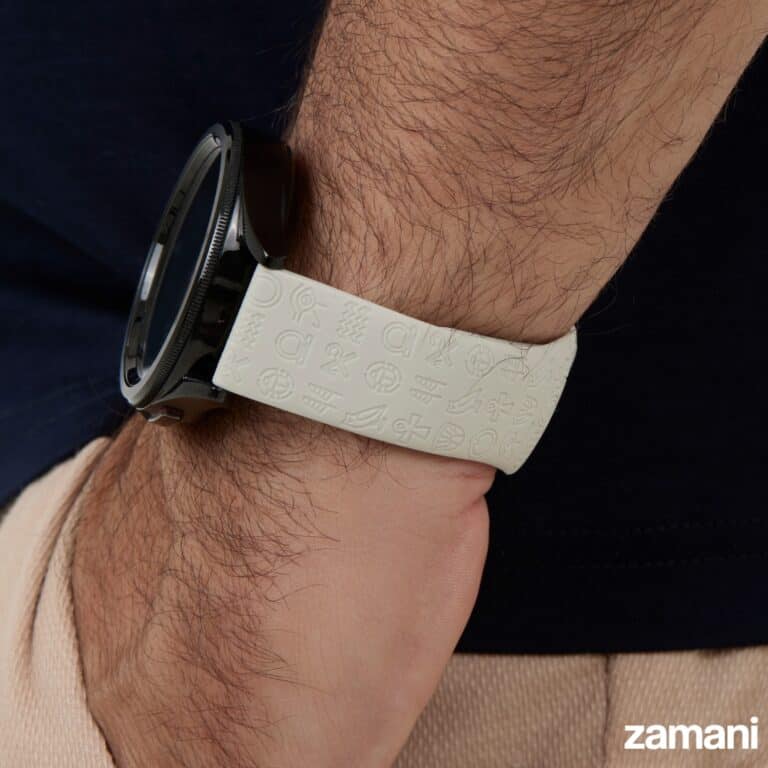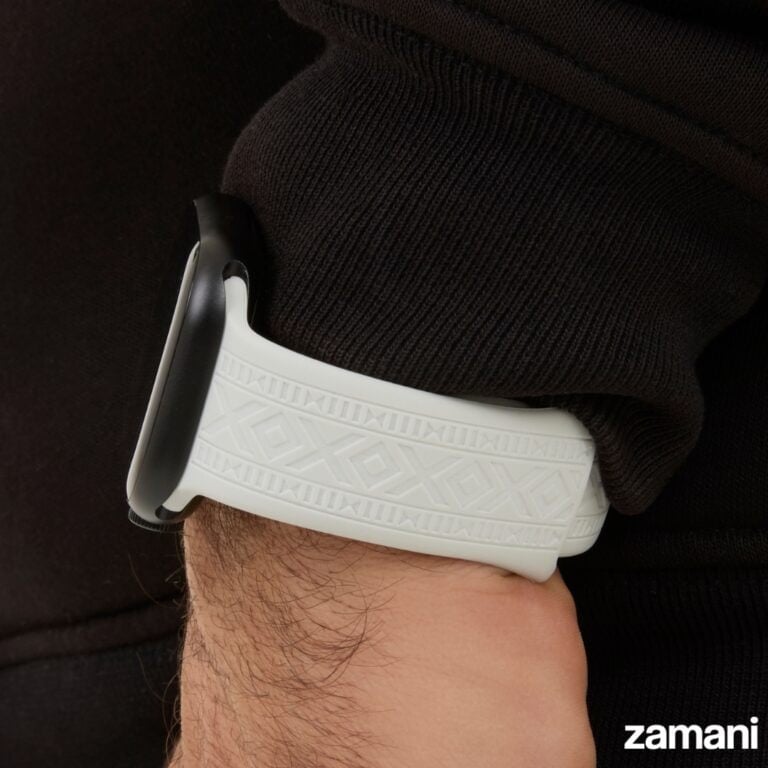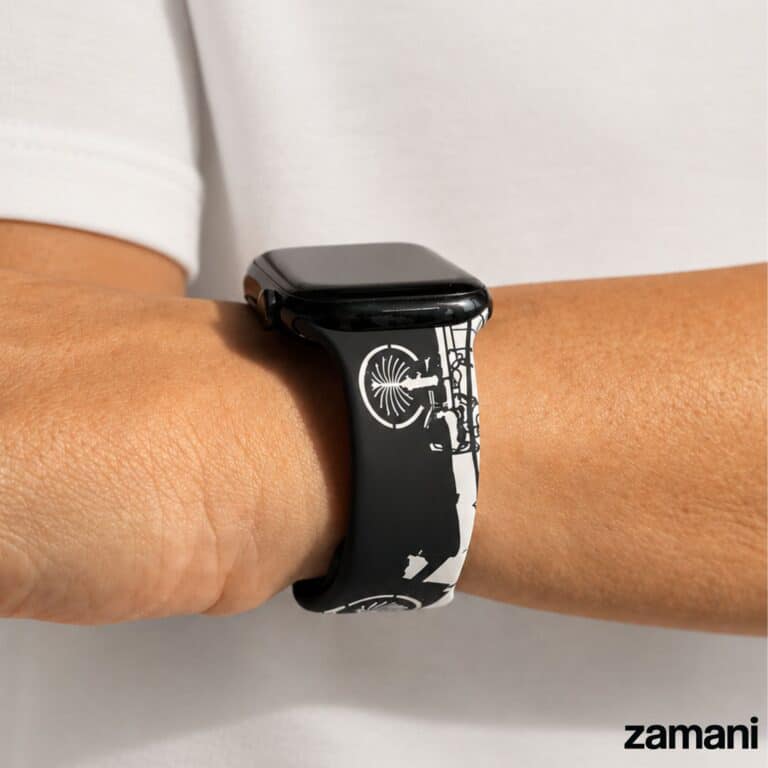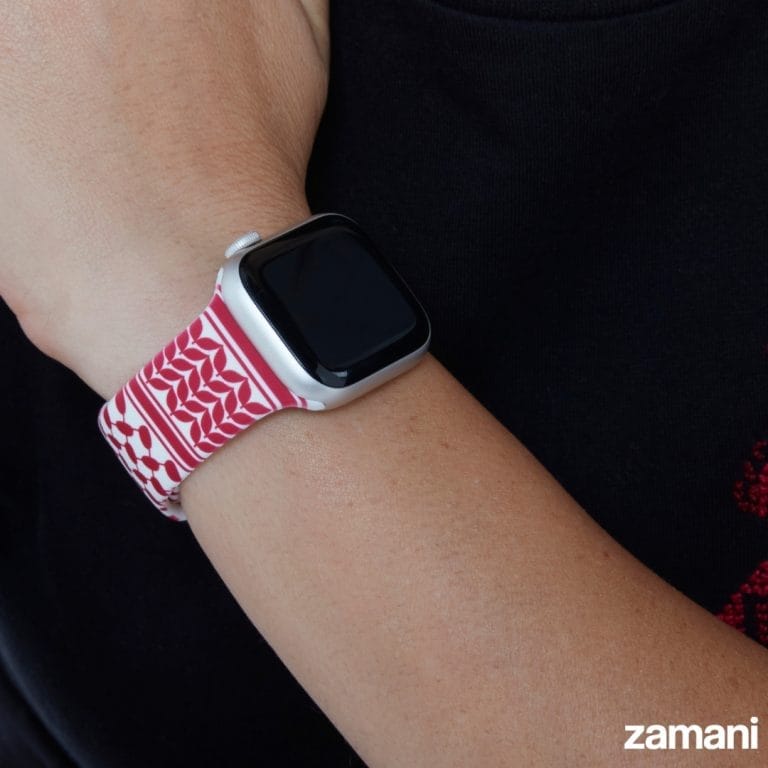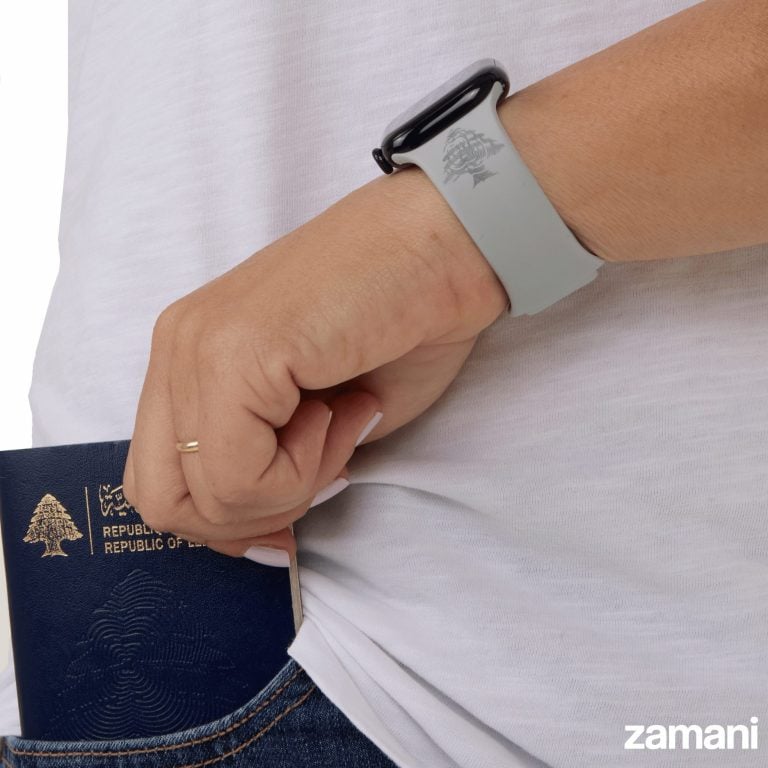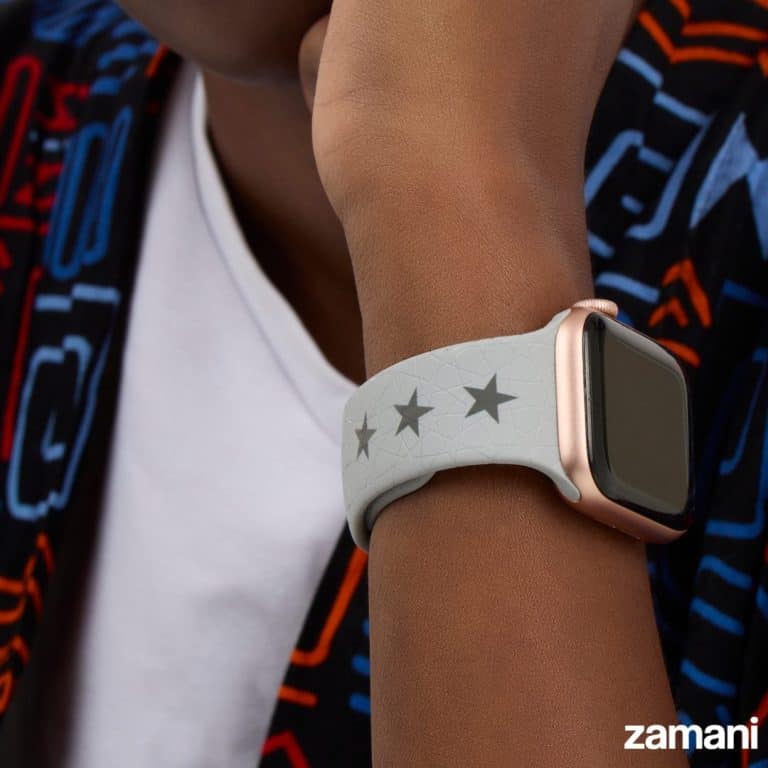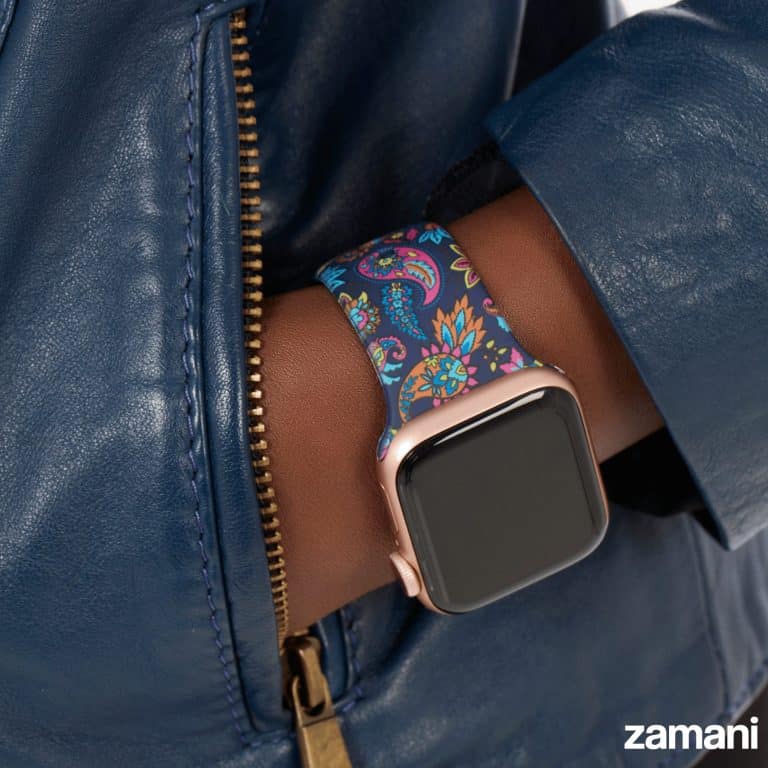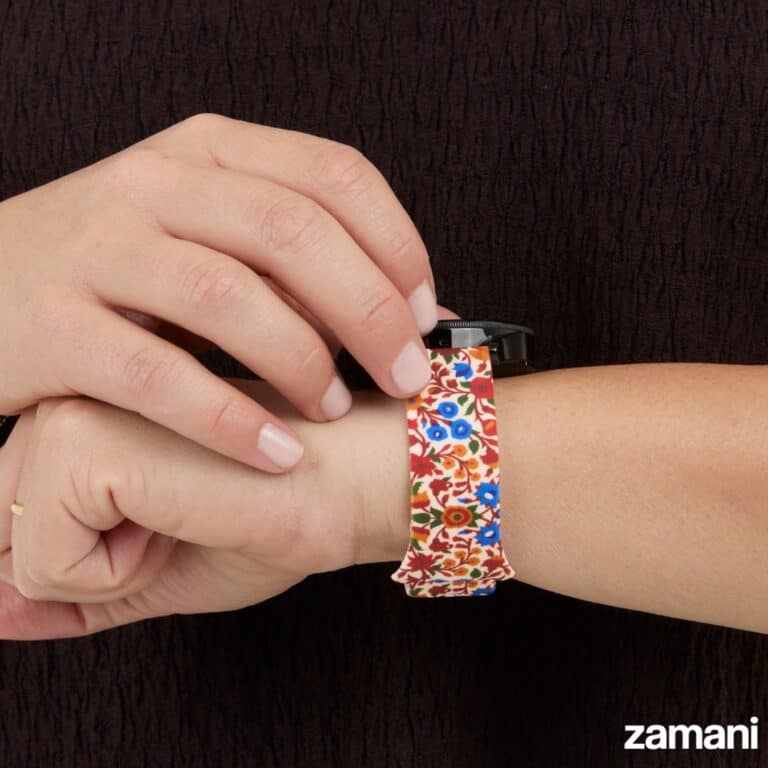
Five New WHOOP Heritage Bands: Sadu, Saudi Emblem, Ceramics, Tatreez and Coffee Cup


A WHOOP measures everything. Heart rate variability, sleep stages, recovery, strain. It is the most quantified piece of fabric most of us will ever wear. And until now, it has shipped looking exactly the same on every wrist that buys one.
We started zamani with one design: the keffiyeh, on a watch band, because we wanted something on our own wrists that meant more than steel and silicone. Five years later, the WHOOP customer keeps writing to us with the same question. Why does my recovery tracker have to look so generic?
It does not. These are the five new heritage WHOOP designs, and below the line is the story of each one.
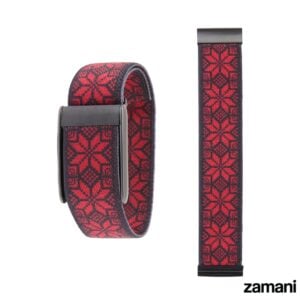
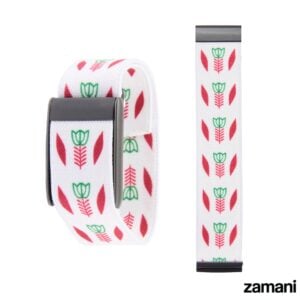
Sadu – the language of the Bedouin loom
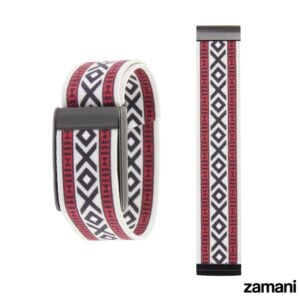
In 2011 UNESCO inscribed Al-Sadu onto the Representative List of the Intangible Cultural Heritage of Humanity. It was overdue. Sadu is the floor-loom weaving of the Bedouin women of the Arabian peninsula, and it predates almost everything in the region except the wells. For centuries it was how a tribe made the things that kept it alive: tent dividers, camel saddle bags, cushion covers, prayer rugs. Black goat hair for warp, sheep wool for weft, dyed with henna and indigo and pomegranate.
The patterns were never just decorative. The geometric diamonds, triangles, and crosshatches were a kind of woven dialect. A weaver in Riyadh worked different motifs than one in Kuwait. A wedding piece looked nothing like a saddle bag. To grow up with sadu around you was to learn a visual language that did not get written down anywhere.

Our gulf customers have asked for sadu since the day we launched. Roula traced the red and black weave by hand from a Khaleeji rug she found in Sharjah, and we ran the design through fifteen prototypes to keep the motif legible at the scale of a WHOOP band. It carries.
If you grew up with sadu on the majlis floor, you will recognise it instantly. If you did not, it is the most striking design in the new lineup, and it works on any wrist.
Emblem of Saudi – two swords, one date palm, the simplest sentence in the kingdom
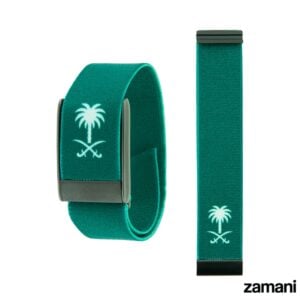
The Saudi national emblem is one of the most readable pieces of national symbolism anywhere. A date palm above two crossed swords. King Abdulaziz adopted it in 1950, eighteen years after the unification of the kingdom in 1932, and it has been on every Saudi passport, embassy seal, and official letterhead since.
The date palm is the older of the two symbols. It is what the peninsula ate before oil. Sustenance, shade, hospitality, the entire desert economy in one tree. The swords are King Abdulaziz and his brother Saud bin Abdulaziz, and the unity that built the kingdom out of forty disparate emirates and tribes. Together it reads as: we feed our own, and we hold our own.

We made this band the way we make Saudi designs. Heritage green in solid silicone, the emblem at the centre of the wrist, no other ornament competing with it. It is the band our Saudi customers reach for on the 23rd of September and the 22nd of February. It is also the strongest gift we make for any Saudi friend who is hard to shop for.
Worn well, it does not need to explain itself. Most things designed in 1950 do not.
Ceramics – the patterns that were always on everything back home
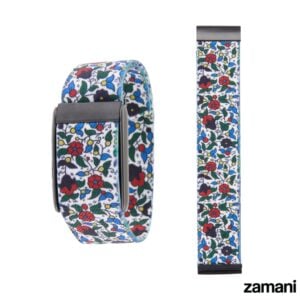
If you grew up in a Palestinian household, or a Levantine one of any kind, you know exactly what this band is before we explain it. The blue and white floral plate your grandmother served maqluba on. The tile mosaic above her kitchen sink. The mug your uncle drank tea from every afternoon. The candy bowl that came out only when guests visited. Every one of those, decorated with the same vocabulary of stylised tulips, cypresses, carnations and eight-pointed stars.
This is Khalili ceramic. Hebron pottery, hand-painted in the workshops of the old city, has been one of the steady industries of Palestine for as long as there has been a Palestine. The Natshe family is still throwing pots on the same wheels their grandfathers used. Their cobalt blue glaze is the colour you remember. The tradition runs into Jerusalem too, where Armenian families brought their own twist on the patterns and they cross-pollinated for a century.

The motifs are not random. The cypress points upward. The tulip is paradise. The carnation is love. They sat on the dishes you ate off and the tiles your bare feet touched, and you absorbed them long before you knew what they meant.
We worked with these references for months because we wanted the band to read as Khalili ceramic, not as generic floral. The blues are accurate. The shapes are accurate. The first time we showed it to our parents, they recognised it before they finished the sentence.
This is heritage that does not announce itself. People who recognise it, recognise it. People who do not, just see something beautiful.
Tatreez – a thousand years of Palestinian women, sewn one stitch at a time
Tatreez is cross-stitch embroidery, but to call it that is like calling Arabic poetry “writing.” Palestinian women have been working tatreez for at least a thousand years, and probably much longer. Every village had its own motifs. The cypresses of Ramallah, the moon of Bethlehem, the orange tree of Jaffa, the peacock of Beit Dajan. A married woman in Hebron carried different stitches on her thobe than one in Galilee. You could read a Palestinian woman the way you read a passport.
What is remarkable about tatreez is how it has travelled. The patterns moved with the women who carried them, into apartments and kitchens far from where they began. Mothers taught daughters who taught granddaughters, on tablecloths and cushion covers and bridal thobes for girls who had never seen the village the motif came from. The craft kept itself alive, one stitch at a time, across continents.

The tatreez WHOOP is one of the most personal designs we have made. The motif is from a Ramallah-region piece in our reference collection. Translating cross-stitch onto silicone took longer than any other band in this lineup because the diagonal lines have to read as stitches, not as printing. We got there.
It is the design our Palestinian customers reach for first. It is also a band our non-Palestinian customers buy after sitting with the story long enough.
Coffee Cup – the finjan, and what gahwa actually is
If you have ever been a guest in an Arab home and turned down a cup of coffee, you will already know that you did something slightly wrong. Gahwa is not a drink. It is the longest-running social protocol in the region. The host pours from the dallah pot into a small handle-less cup called a finjan. The cup is small on purpose: it is filled three times, not once. The first cup is hayf, the welcome. The second is sayf, the sword, meaning the host will defend the guest. The third is dayf, the guest, meaning the visit honours the home.
The coffee itself is not what most non-Arabs think of as coffee. Lightly roasted green beans, ground with cardamom, sometimes saffron, sometimes cloves. Pale gold, not brown. Bitter, fragrant, served with dates. You drink, you tilt the cup to indicate “no more,” your host pours again anyway because that is the dance.

The finjan, repeated as a small motif across this band, is the most subtle of the five new designs. From a distance it reads as pattern. Up close it is a daily reminder of the morning you were nine years old, watching your grandmother roast coffee on the stove, and the smell of cardamom that filled the entire kitchen.
If you grew up with gahwa, this is the band for you. If you did not, this is the band you wear after one slow Arabic breakfast.
If you cannot pick one, take a bundle
We packaged these into curated sets, three WHOOP bands at one price. They are designed for the customer who wants the full range, the partner who wants to gift across a family, and the wholesale buyer who wants a strong opening order.
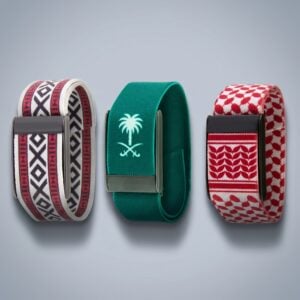
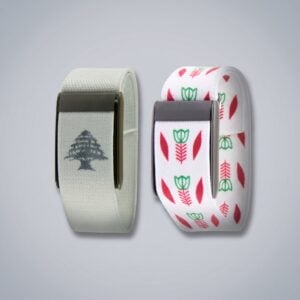
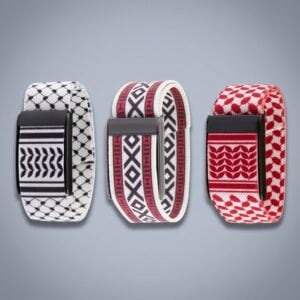
- باقة Whoop السعودية: Sadu, Emblem of Saudi, and gulf-heritage patterns.
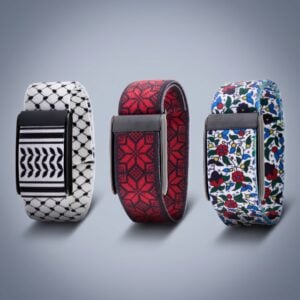
- باقة Whoop الفلسطينية: Tatreez, keffiyeh, and watermelon.
- The WHOOP Lebanon Bundle: Cedar, ceramics, and Levantine designs.
- The WHOOP Origins Bundle: Three of our best-selling heritage WHOOP bands.
Compatibility, fit, and the only practical thing you need to know
All five bands fit WHOOP 3.0, 4.0 and 5.0/MG. Pick your model at checkout. If you are not sure which generation you have, this two-minute guide will tell you in one look.
Premium high-grade silicone. The band sits above the WHOOP sensor and does not interfere with HRV, SpO2 or skin temperature. Sweat-resistant, gym-ready, durable. We do not make a band you cannot train in.
Heritage on every WHOOP
Recovery is yours. Identity is yours. Both belong on the same wrist.
Five new designs joining the keffiyeh, shemagh and cedar already in the lineup. Nine WHOOP bands in total, four curated bundles. All ship from Dubai.
أول مرة؟ استخدم كود WELCOME10 عند إتمام الطلب لخصم 10%.