Why we tested our bands


A few months ago, a friend asked me a question I could not answer.
She had bought a watch band, not from us, from a generic online seller, and her wrist had broken out. The skin had reacted to something, and she wanted to know what. The product listing said “high quality silicone, premium stainless steel.” She emailed the seller. The seller never replied.
I thought about that for a long time afterwards. We had been shipping zamani bands for years. Hundreds of thousands of pieces, across more than thirty countries. Customers wore our bands to weddings, to graduations, on Eid, on their first day at a new job. People I had never met were carrying the patterns of their grandparents on their wrist because of something we made. And if any one of them ever asked me what was in it, I realised I could not give them a confident, documented answer either.
So we changed that.
This is the story of why zamani started independently testing its materials, and why we have decided to keep doing it.

What I learned looking around the industry
The first thing I learned was that almost no one else in the watch-band category does this.
Browse the accessory aisles of any marketplace. Apple-style silicone bands, WHOOP replacements, woven straps in every cultural pattern imaginable. The vast majority, including some of the most popular and best-reviewed, have never been independently tested for chemical safety. Not by their manufacturers, not by their sellers, not by the platforms they live on. There is no regulation requiring it in most markets, and accessories in this price band do not warrant it commercially.
That is the honest truth. At our price point, the rational business decision is to skip it.
I did not want to make that decision.
What we actually did
We sent samples of every product family we make to QIMA, an independent testing laboratory accredited under ISO/IEC 17025. Their chemistry team is in Shanghai. We picked QIMA because they are not connected to our suppliers, they cannot be influenced by us, and their reports are accepted in customs and audits across the European Union, the United States and the Gulf.
We asked them to test for the substances regulators actually care about. Nickel release, the chemical at the heart of most metal-allergy reactions. Lead and cadmium in the metal clasps. Phthalates in the silicone. Polycyclic aromatic hydrocarbons, the trace compounds that show up in poorly-processed rubber and silicone. Azo dyes and formaldehyde in the woven nylon and polyester. Mercury, arsenic, chromium. The whole panel.


We had them check our materials against three frameworks. EU REACH Annex XVII, the European Union’s master list of substances restricted in consumer products. California Proposition 65, the United States’ most aggressive exposure standard, and if you have ever seen a Prop 65 warning on something you bought, you have already encountered the framework. ASTM F2999-19, the American specification for adult jewelry.
These three together cover what is legally enforceable in our largest current and planned markets.
The cultural part of this
Here is what I have come to believe.
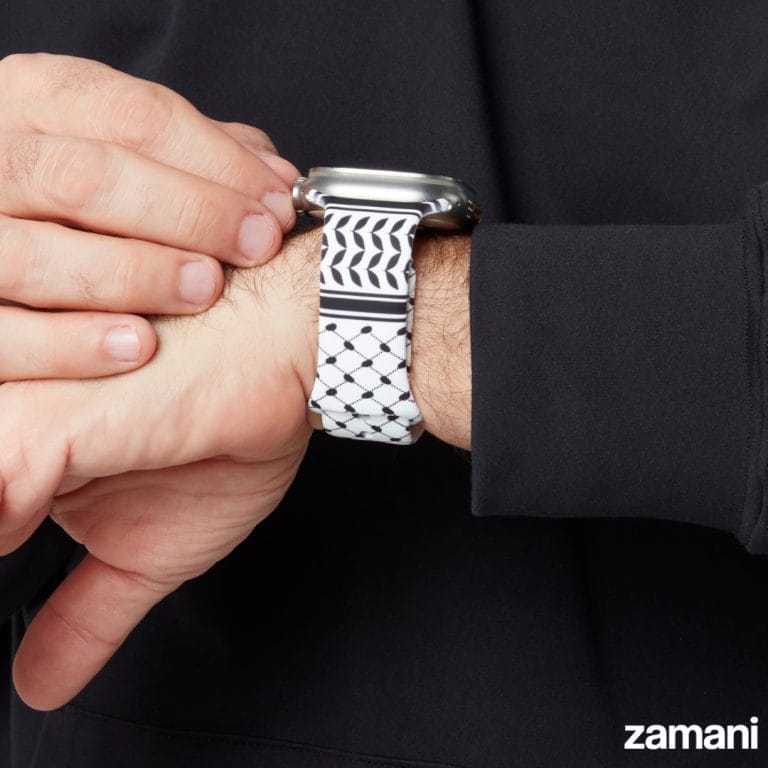
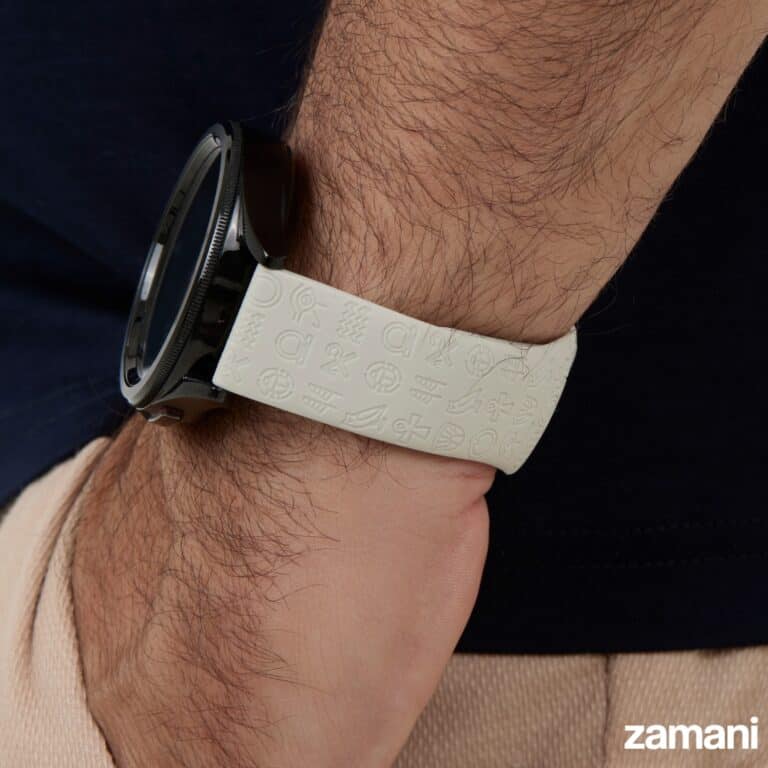
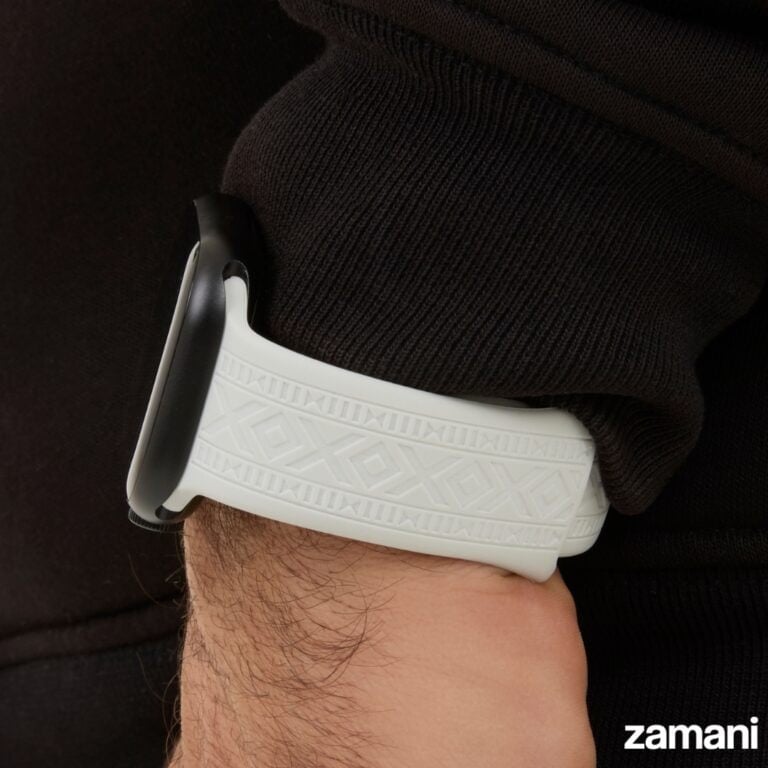
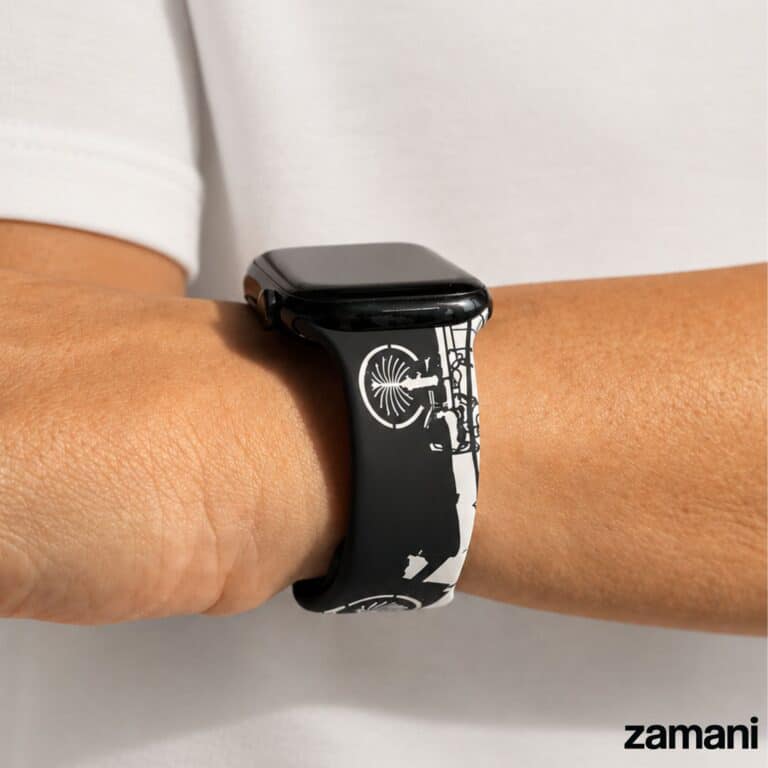
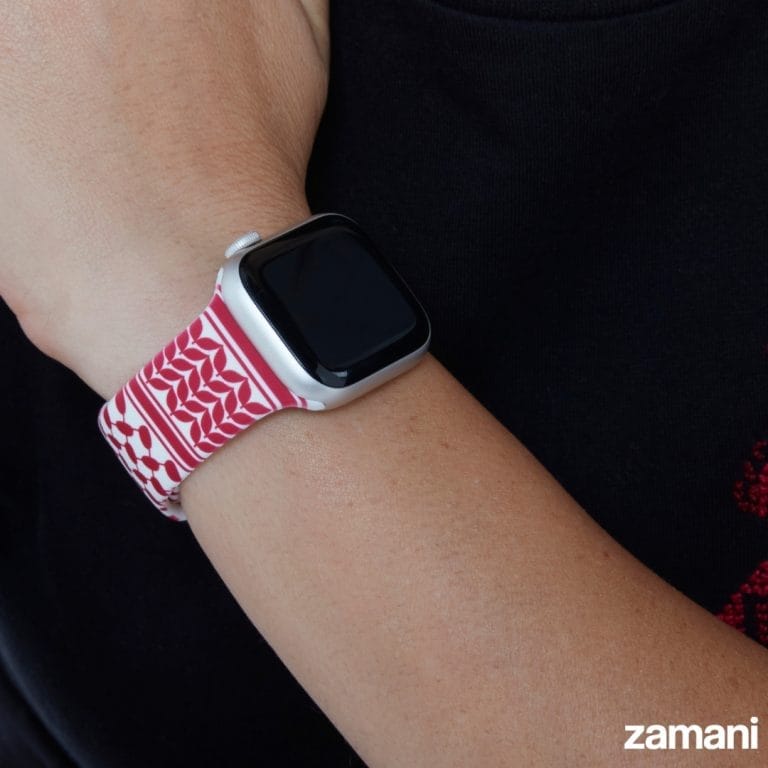
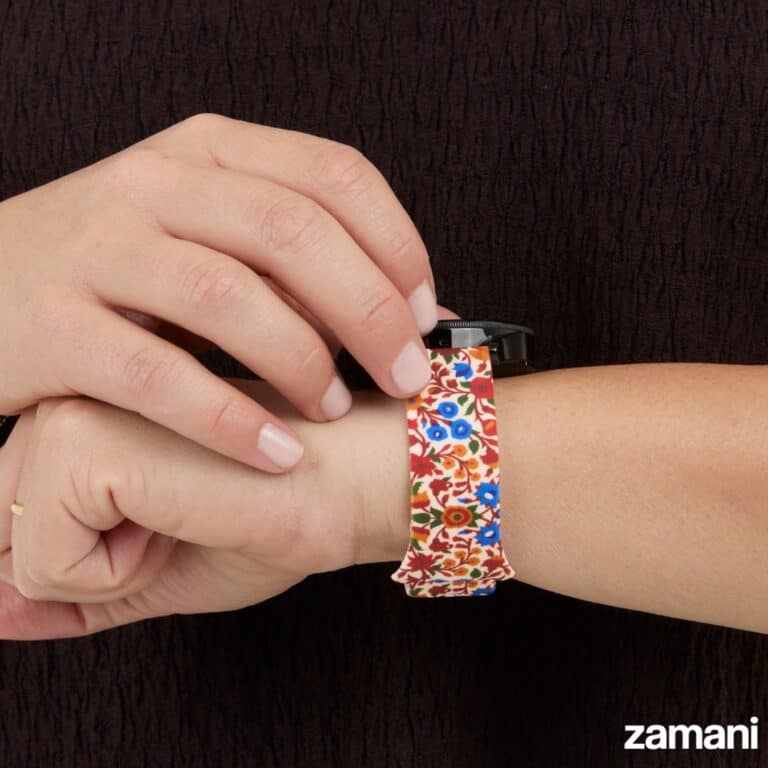
We make watch bands inspired by tatreez, sadu, ceramics, the carpet weavings of Persia, the woven cotton of a shemagh. Every pattern on a zamani band started somewhere. In the hands of a craftswoman in Hebron. On the loom of a Bedouin weaver in the Najd. In a tile workshop in Damascus. The patterns are not decoration. They are memory.
Putting one of those patterns on a piece of cheap material would be, in a small but real way, an insult to where it came from. If you are going to wear the tatreez of Palestine on your wrist, the silicone underneath should match the seriousness of the embroidery on top.
That is the connection between heritage and testing that took me a while to see. We test because the people who wear our pieces deserve more than a print of their culture. They deserve materials that respect them.
It is not a marketing slogan. It is the reason I sleep better at night.
Around the world
Worn, every day, by people we have never met.


What we found
Most of what came back was straightforward. Every regulatory test passed: REACH, Prop 65, ASTM F2999. The silicone is clean. The polyester is clean. The nylon is clean. No detectable phthalates, no detectable PAHs, no detectable formaldehyde or azo dyes. The lead and cadmium readings on every component are well below every applicable threshold. Nickel release on the metal clasps is within compliant limits.
Where this goes from here
Our plan is to keep doing this. Every season, samples from each product family go to QIMA. When materials or suppliers change, we re-test. When new regulations come in (and they will, the European Union has a PFAS restriction in progress, the United States keeps tightening Prop 65), we adapt.
We have built a page on our website at zamanistore.com/materials with the full breakdown. What each band is made of. What we tested for. What the standards mean. Wholesale partners and journalists can request the underlying laboratory report on email.
If you have ever wondered what is actually in the band you wear, you should now be able to find out without having to ask us. That is the bar we wanted to clear.
Frequently asked questions
Who tests zamani bands?
Testing is conducted by QIMA Testing (Shanghai) Limited, an internationally accredited testing laboratory under ISO/IEC 17025. QIMA is independent of zamani and our manufacturers. We do not own the lab and we do not influence the results.
What standards do you test against?
EU REACH Annex XVII (European chemical-safety restrictions), California Proposition 65 (US exposure standard for cancer and reproductive-harm chemicals), and ASTM F2999-19 (US specification for adult jewelry). Nickel release is tested per EN 1811:2023 with EN 12472:2020 pre-treatment.
Are zamani bands hypoallergenic?
No material is truly hypoallergenic for every person. What we can say is that our metal clasps tested within the EU nickel-release compliance threshold, and the silicone, nylon and woven polyester all came back clean on phthalates, formaldehyde, azo dyes and PAHs. If you are sensitive to nickel, our stainless steel options are the safest choice. If you ever react to a band, please contact us at [email protected].
Can I see the lab report?
Yes. Wholesale partners, retailers and press can request the full third-party laboratory report by emailing [email protected] with the subject “test report request.”
How often do you re-test?
Every season, and whenever materials or suppliers change. Compliance is not a one-time event.
Khaled, founder of zamani
{“@context”:”https://schema.org”,”@type”:”FAQPage”,”mainEntity”:[{“@type”:”Question”,”name”:”Who tests zamani bands?”,”acceptedAnswer”:{“@type”:”Answer”,”text”:”Testing is conducted by QIMA Testing (Shanghai) Limited, an internationally accredited testing laboratory under ISO/IEC 17025. QIMA is independent of zamani and our manufacturers.”}},{“@type”:”Question”,”name”:”What standards do you test against?”,”acceptedAnswer”:{“@type”:”Answer”,”text”:”EU REACH Annex XVII, California Proposition 65, and ASTM F2999-19 for adult jewelry. Nickel release is tested per EN 1811:2023 with EN 12472:2020 pre-treatment.”}},{“@type”:”Question”,”name”:”Are zamani bands hypoallergenic?”,”acceptedAnswer”:{“@type”:”Answer”,”text”:”No material is truly hypoallergenic for every person. Our metal clasps test within the EU nickel-release compliance threshold, and the silicone, nylon and woven polyester all came back clean on phthalates, formaldehyde, azo dyes and PAHs.”}},{“@type”:”Question”,”name”:”Can I see the lab report?”,”acceptedAnswer”:{“@type”:”Answer”,”text”:”Yes. Wholesale partners, retailers and press can request the full third-party laboratory report by emailing [email protected] with the subject ‘test report request’.”}},{“@type”:”Question”,”name”:”How often do you re-test?”,”acceptedAnswer”:{“@type”:”Answer”,”text”:”Every season, and whenever materials or suppliers change. Compliance is not a one-time event.”}}]}