The keffiyeh has many English spellings: kufiya, kuffiyeh, keffiyah, kaffiyeh, and several more. If you have searched for this iconic garment and landed here, you probably noticed the inconsistency yourself. The good news is that every one of those spellings refers to the exact same thing. This guide explains why the variations exist, which spellings dominate in which regions, and how to pronounce the word correctly.

What Is a Kufiya?
A kufiya (also written keffiyeh, kuffiyeh, or kuffiyah) is a traditional head covering worn across the Arab world and beyond. It is a square of woven cotton cloth, folded diagonally and draped over the head, often held in place by an agal (a doubled black cord). The garment is practical, protecting against sun, dust, and cold, and it has accumulated deep layers of cultural and political meaning over centuries.
The Arabic word itself is typically written as كوفية or كفية. Scholars trace the root to Kufa (الكوفة), the historic Iraqi city that was a major weaving center in early Islamic history. Others link it to the Arabic root for “shoulder” (كتف, katif), because the cloth was historically draped over the shoulders. Both theories have support, and both place the word’s origin firmly in the Arabic-speaking world.
Pronounced phonetically: kuh-FEE-yuh (stress on the second syllable). The final vowel sound is a soft “uh,” not a hard “ay.”
Kefiyeh vs Kufiya vs Kuffiyeh: Which Is Correct?
All of them are correct. English does not have an official transliteration standard for Arabic, which means each region, publisher, and community developed its own spelling conventions over time. This is not unique to the keffiyeh: the same phenomenon appears with “falafel/felafel,” “hummus/houmous,” and dozens of other Arabic loanwords in English.
The variation reflects real linguistic differences too. Arabic has sounds that do not exist in English, including the qoph (ق), the ayin (ع), and emphatic consonants that change the quality of surrounding vowels. When speakers from different backgrounds attempted to write the word in English, they prioritized different sounds and used different conventions, producing the range of spellings in use today.
The important thing to understand: there is no single “correct” English spelling. What matters is context. In academic writing, “kufiya” (from standard Modern Standard Arabic transliteration) is common. In mainstream English journalism and retail, “keffiyeh” dominates. In Gulf Arabic-speaking communities, “kufiya” or “ghutra” are the preferred terms.
Spelling Variants Comparison Table
| Spelling | Est. Monthly Searches | Regional Use | Notes |
|---|---|---|---|
| keffiyeh | 1,200-1,800 | Global English, journalism, retail | Most common English spelling |
| kufiya | 800-1,200 | Middle East, academic texts | Closest to Arabic pronunciation |
| kuffiyeh | 400-600 | Regional variant, diaspora | Double-f variant, common in informal writing |
| keffiyah | 200-400 | Alternate pronunciation-based spelling | -ah ending mirrors Arabic feminine noun |
| kufiyah | 150-300 | Formal Arabic transliteration | Academic and formal use |
| kaffiyeh | 150-250 | Variant, common in older texts | -a- vowel before double-f |
| kufia | 100-150 | Shortened form, social media | Drops final syllable |
| kufiyya | 50-100 | Double-letter variant | Reflects Arabic gemination |
| kafiya | 50-100 | Formal variant | Alternate vowel pattern |
| keffiya | 30-80 | Shortened variant | Drops final syllable from keffiyeh |
Regional Spelling Preferences
Geography strongly influences which spelling a person uses.
Gulf Arabic speakers (UAE, Saudi Arabia, Kuwait, Qatar, Bahrain): The dominant term is “kufiya” or “ghutra” (for the white version). “Keffiyeh” is understood but less common in everyday Gulf speech. Academic and government documents in the region often use “kufiya.”
Levant (Palestine, Jordan, Lebanon, Syria): “Keffiyeh” is the standard term. The garment has deep political and cultural significance in Palestinian identity, and English-language coverage of Palestinian issues uses “keffiyeh” almost exclusively.
Diaspora communities: Usage is mixed and reflects family origin. Palestinians abroad typically say “keffiyeh.” Gulf expatriates say “kufiya.” Academic and heritage organizations often standardize on “kufiya” in their formal materials.
Western media and retail: “Keffiyeh” dominates in English-language journalism, fashion coverage, and online retail. This is partly because much of the international coverage of the garment has focused on Palestinian cultural identity, which uses the Levantine spelling.

How to Pronounce Keffiyeh (and Kufiya)
Both words refer to the same garment and are pronounced nearly identically in English:
keffiyeh: kuh-FEE-yuh (IPA: /kəˈfiːjə/)
kufiya: koo-FEE-yuh (IPA: /kuːˈfiːjə/)
The main difference is the initial vowel: “kuh” in keffiyeh vs “koo” in kufiya. In practice, most English speakers say kuh-FEE-yuh regardless of which spelling they use. The final “-yuh” sound is soft, not a hard “yay” or “yeah.” Stress the second syllable.
In Arabic, the pronunciation varies by dialect. Gulf Arabic speakers typically say “ku-FEE-ya” with a long “oo” sound. Levantine Arabic speakers say “kuh-FEE-yeh” with a shorter initial vowel.
The Keffiyeh as a Watch Band
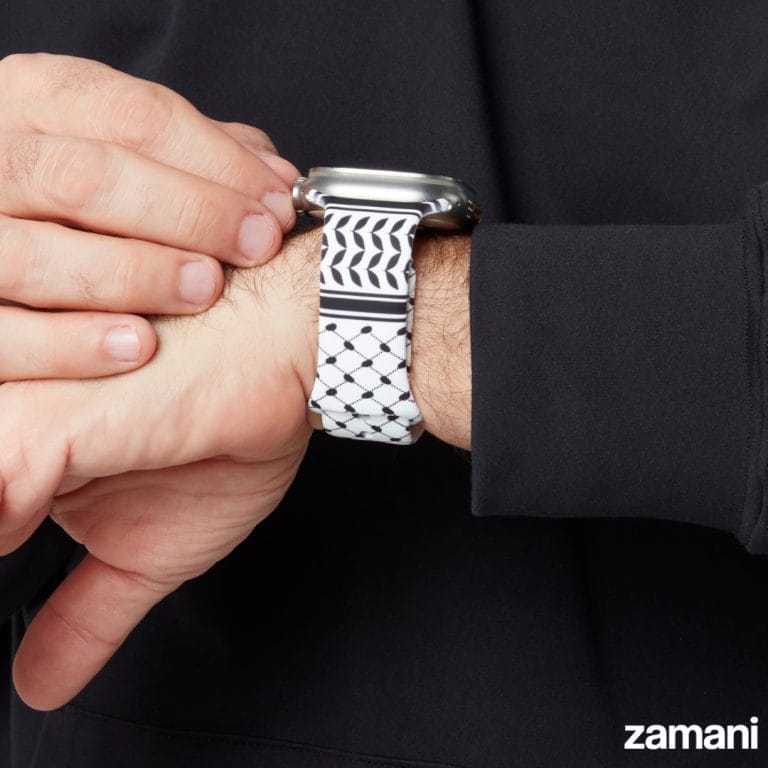
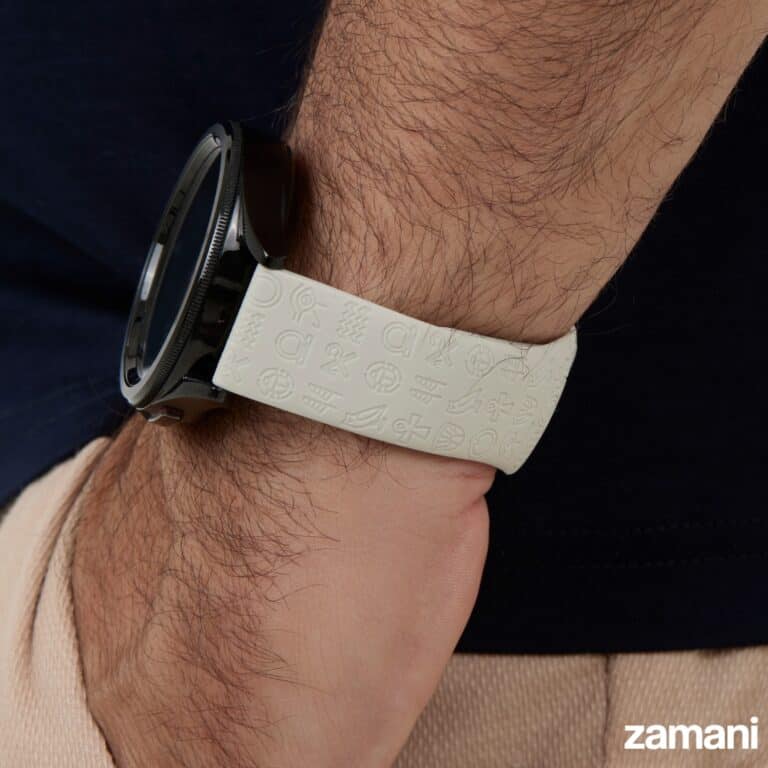
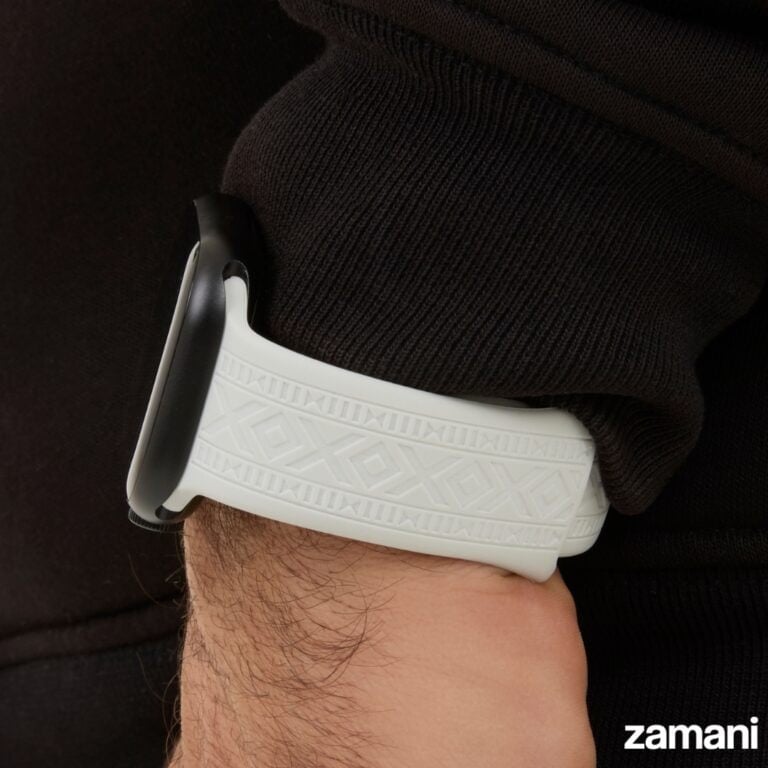
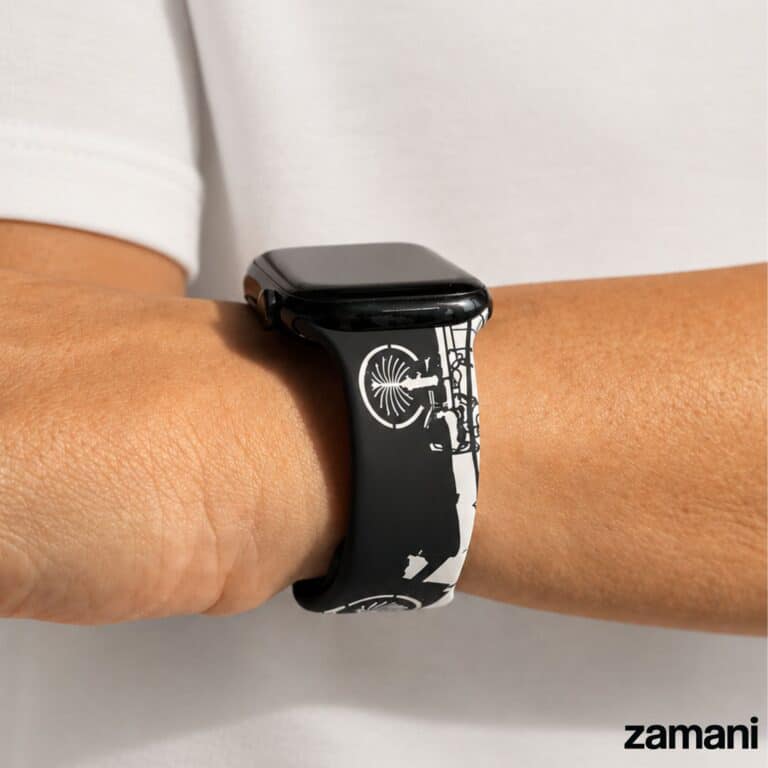
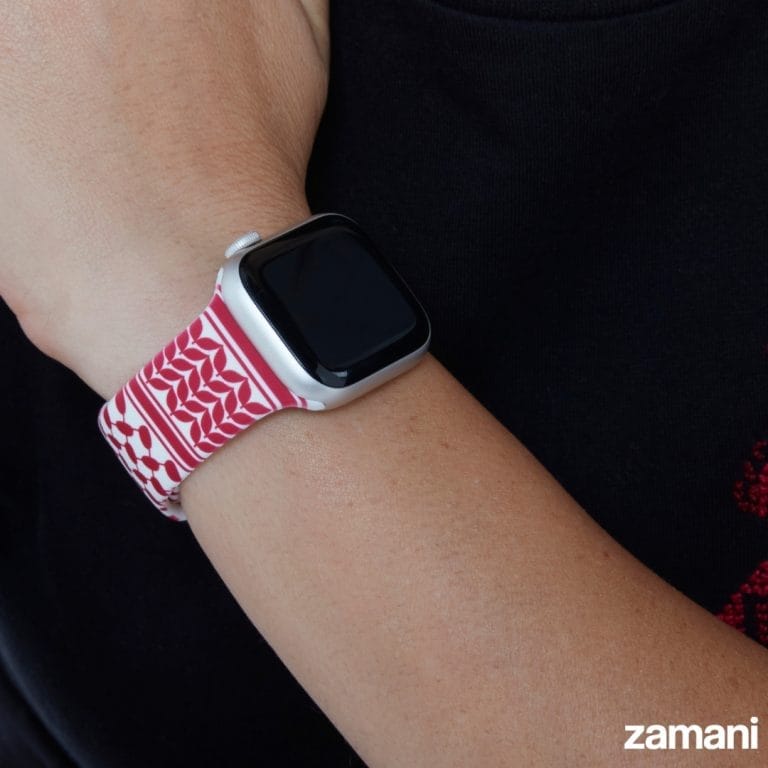
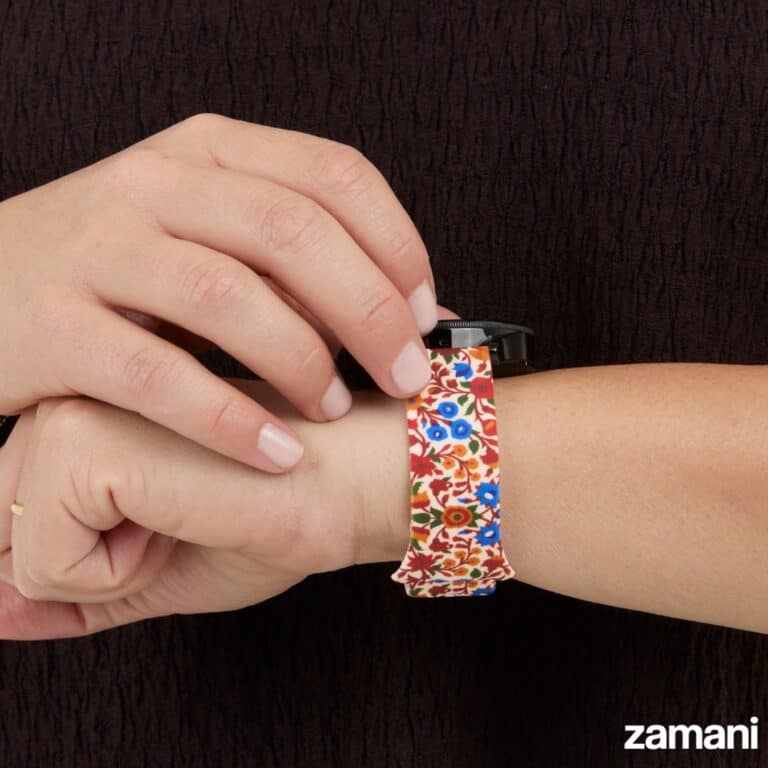
At zamani, the keffiyeh pattern is one of our most recognized designs. The iconic black-and-white or red-and-white geometric motif of the traditional keffiyeh cloth has been interpreted into watch band form, making it wearable heritage for everyday use.
Our keffiyeh watch bands feature the traditional Palestinian pattern in black-and-white and red-and-white colorways, plus the Olive Keffiyeh variant. These bands fit Apple Watch, Samsung Galaxy Watch, Garmin, WHOOP, and most watches with standard 20mm or 22mm spring bar lugs.
For the full collection and to find your watch compatibility, see our Palestinian Watch Bands collection. For more on how to spell and pronounce keffiyeh, read our complete spelling guide.

Frequently Asked Questions
Is kufiya the same as keffiyeh?
Yes. Kufiya and keffiyeh are two English spellings of the same Arabic word (كوفية). They refer to the same traditional head covering worn across the Arab world. The spelling differences reflect regional Arabic dialects and different English transliteration conventions, not differences in the garment itself.
Which spelling is most common in English?
In English-language media, retail, and general usage, “keffiyeh” is the most common spelling. It appears in major dictionaries including Merriam-Webster and Oxford. “Kufiya” is common in academic writing and among Gulf Arabic speakers. Both are correct and widely understood.
How do you pronounce kuffiyeh?
Kuffiyeh is pronounced kuh-FEE-yuh, with the stress on the second syllable. The double-f in the spelling represents the same sound as the single-f in keffiyeh. The pronunciation is identical: /kəˈfiːjə/.
Where does the word keffiyeh come from?
Most scholars trace “keffiyeh” (كوفية) to Kufa, the ancient Iraqi city that was a center of textile production in early Islamic history. The garment was historically associated with that region and took the city’s name. Another theory links it to the Arabic word for shoulder (كتف), describing how the cloth was worn.
What is the difference between a keffiyeh and a ghutra?
In Gulf Arabic usage, a “ghutra” (غترة) typically refers to the plain white head covering worn in the Gulf region, while “kufiya” or “shimagh” often refers to the red-and-white checked version. In Levantine usage, “keffiyeh” covers both. The garments are related variations of the same basic head covering, distinguished by color, pattern, fabric weight, and regional name conventions.
Shop zamani’s heritage keffiyeh watch bands at zamanistore.com/palestine. Available in Black, Red, White, and Olive patterns. Fits Apple Watch, Samsung, Garmin, WHOOP, and more. Ships worldwide. Not a watch wearer? The keffiyeh also comes as a reversible wristband.