Keffiyeh, Kufiya, Kaffiyeh: What Is the Correct Spelling and Why It Matters


If you have ever searched for a keffiyeh watch band and seen ten different spellings, you are not alone. The word comes from Arabic, and because Arabic letters do not map neatly to English, the same word gets written in many ways. Here is a quick guide to the most common spellings, what they mean, and why they all point to the same beloved Palestinian pattern.
Keffiyeh, Kufiya, Kaffiyeh: Why So Many Spellings?
The original Arabic word is كوفية (kūfiyyah). When transliterating Arabic into English, there is no single standard. Different publications, regions, and style guides have adopted different romanizations over the years. All of them describe the same traditional headscarf, worn across Palestine and the broader Arab world for centuries.
Here are the most common English spellings you will encounter:
| Spelling | Where You See It |
|---|---|
| Keffiyeh | Most common English spelling. Used by the New York Times, Wikipedia, and most Western media. |
| Kufiya | Widely used in Arabic-speaking communities and academic texts. Closer to the original Arabic pronunciation. |
| Kuffiyeh | Common variant, especially in British English publications. |
| Kaffiyeh | Merriam-Webster dictionary alternate entry. Used in American English. |
| Kefiyeh | Simplified transliteration, common in casual writing. |
| Keffiyah / Kufiyah | Variants using the -ah ending to reflect the Arabic feminine marker. |
| Shemagh | The term used in Gulf countries (Saudi Arabia, Kuwait, Qatar) for a similar garment. |
No matter how you spell it, you are talking about the same iconic pattern: the bold crosshatch that has been a symbol of Palestinian identity for generations.
For a deeper breakdown covering all 10 spelling variants, regional usage, and IPA pronunciation, see our complete kufiya vs keffiyeh spelling guide.
What Does the Keffiyeh Pattern Mean?
The keffiyeh pattern tells a story in every line. The fishnet motif represents the nets of Palestinian fishermen along the coast. The bold intersecting lines symbolize trade routes that connected Palestinian villages. The olive leaf patterns woven into some keffiyehs represent the deep connection between Palestinians and their olive groves.
Over the decades, the keffiyeh evolved from daily workwear into one of the most recognized cultural symbols in the world. It is heritage, identity, and resilience, all woven into a single piece of fabric.
The Keffiyeh at zamani
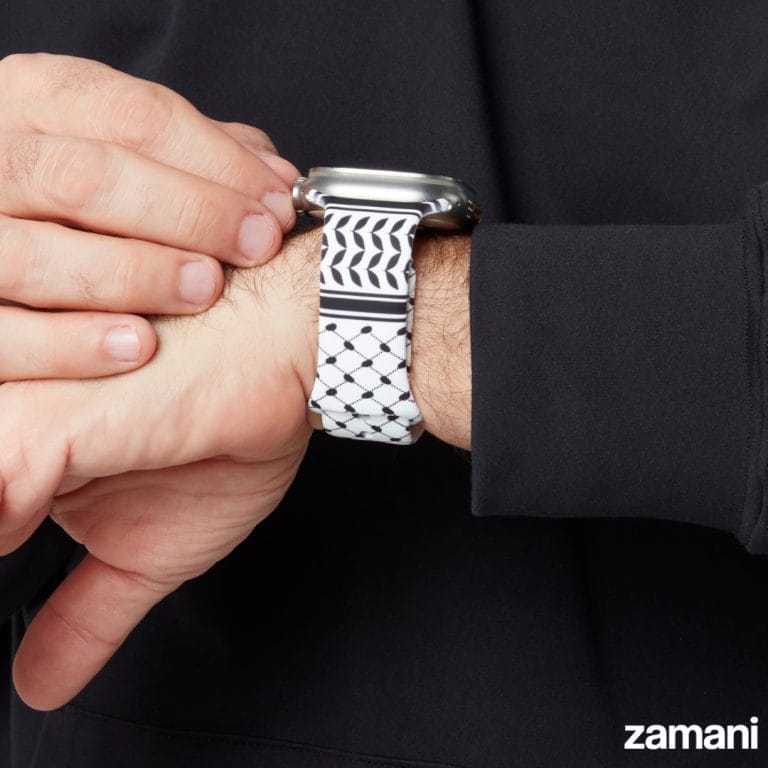
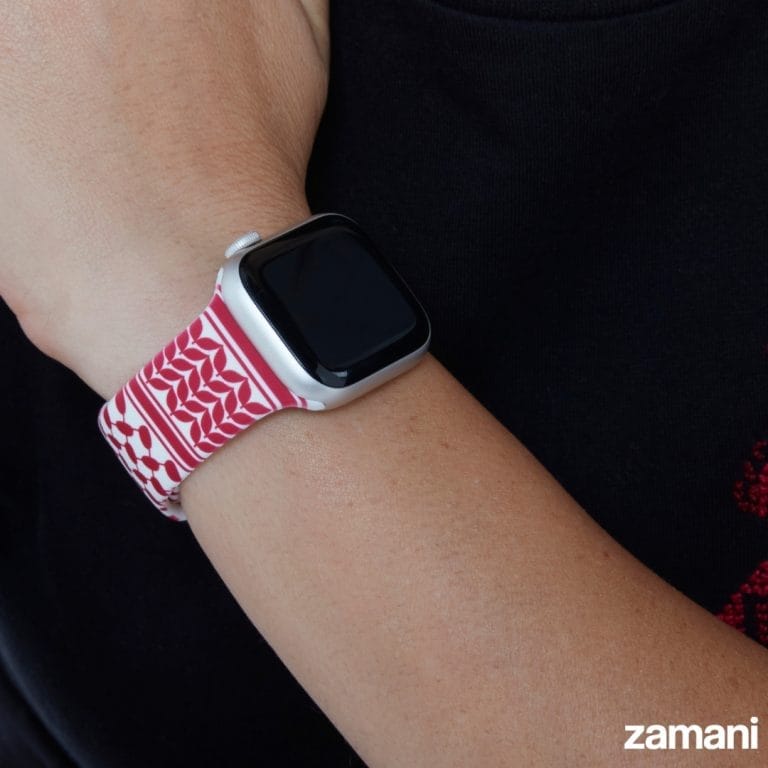
At zamani, we took this iconic pattern and put it where it belongs: on your wrist. Our keffiyeh watch band (or kufiya watch band, if that is how you spell it) engraves the traditional crosshatch pattern into water-resistant silicone that fits Apple Watch, Samsung Galaxy Watch, Garmin, Huawei, and Whoop.
We make it in three colorways:
- Classic White: the original, clean lines on white silicone
- Black Keffiyeh: sleek and minimal with the pattern catching light
- Olive Green: earthy, subtle, deeply symbolic
Want all three? The Keffiyeh Bundle brings them together at a better price.
We also make a Shemagh watch band for those who know this garment by its Gulf name.
Frequently Asked Questions
Is it spelled keffiyeh or kufiya?
Both are correct English transliterations of the Arabic word كوفية. “Keffiyeh” is the most common spelling in Western media and dictionaries, while “kufiya” is widely used in Arabic-speaking communities and stays closer to the original pronunciation. You may also see it written as kuffiyeh, kaffiyeh, kefiyeh, keffiyah, kufiyah, kafiya, or kufia. All refer to the same traditional Palestinian headscarf.
What is a keffiyeh watch band?
A keffiyeh watch band (also called a kufiya or kaffiyeh watch band) is a smartwatch strap featuring the iconic crosshatch pattern of the traditional Palestinian scarf. zamani makes keffiyeh bands for Apple Watch, Samsung Galaxy Watch, Garmin, Huawei, and Whoop.
What is the difference between a keffiyeh and a shemagh?
Both terms refer to the same type of traditional headscarf. “Keffiyeh” is the term used most commonly in Palestinian and Levantine contexts. “Shemagh” is the word used in Gulf countries like Saudi Arabia and Kuwait. The garments are essentially the same, though shemaghs in the Gulf tend to come in a wider range of colors. zamani makes both keffiyeh and shemagh watch band designs.
How do you pronounce keffiyeh?
The most common pronunciation is keh-FEE-yeh, with the stress on the second syllable. The “kufiya” pronunciation is koo-FEE-yah, which is closer to how it sounds in Arabic.
What watch models does the keffiyeh band fit?
The zamani keffiyeh watch band fits Apple Watch (all series), Samsung Galaxy Watch, Google Pixel Watch, Garmin, Huawei, Amazfit, and most smartwatches with standard 20mm or 22mm lugs. We also make a dedicated Whoop version. Check our Watch Guide to find your fit.
Want the full story? Read why the keffiyeh watch band is our most popular heritage strap.
Explore the full Palestinian collection.
Why do watch bands use keffiyeh patterns?
The keffiyeh pattern is one of the most visually distinctive geometric designs in the world. Its bold crosshatch grid, derived from traditional Palestinian weaving, translates exceptionally well onto the curved surface of a silicone watch band. Unlike printed patterns, the zamani keffiyeh is engraved into the silicone — meaning the pattern has depth and texture you can feel. For many wearers, it is also a way to carry a heritage symbol into everyday life without the weight of a statement piece.
What is the difference between keffiyeh and shemagh?
Keffiyeh and shemagh refer to the same type of traditional Arab headscarf. “Keffiyeh” (or kufiya) is the term most common in Palestinian and Levantine contexts. “Shemagh” is used in Gulf countries including Saudi Arabia, Kuwait, Qatar, and the UAE. The garments are functionally identical: a large square cotton cloth worn as a headscarf, sun shield, or neck wrap. Regional color traditions differ — the classic Palestinian keffiyeh is black-and-white, while Gulf shemaghs are often red-and-white. zamani makes watch bands in both the keffiyeh and shemagh patterns.
Is kuffiyeh a correct spelling of keffiyeh?
Yes. “Kuffiyeh” is a valid alternate English spelling of the same word. Because Arabic does not map directly to English letters, transliterations vary. Common correct spellings include: keffiyeh, kufiya, kuffiyeh, kaffiyeh, kefiyeh, keffiyah, and kufiyah. All refer to the same traditional Palestinian headscarf. Merriam-Webster lists “kaffiyeh” as its primary entry. Wikipedia uses “keffiyeh.” Academic texts often use “kufiya” as closest to the Arabic pronunciation.
What does the keffiyeh pattern symbolize?
The keffiyeh pattern carries several layers of meaning. The fishnet motif represents the nets of Palestinian fishermen along the Mediterranean coast. The bold intersecting lines symbolize trade routes that connected Palestinian towns and villages. The olive leaf details woven into some keffiyehs represent the deep Palestinian connection to olive cultivation. Over the twentieth century, the keffiyeh became a global symbol of Palestinian national identity and resistance, worn by political figures, activists, and diaspora communities in over 50 countries.
Where can I buy a keffiyeh watch band?
zamani makes keffiyeh watch bands available worldwide at zamanistore.com. The collection includes the classic white keffiyeh, keffiyeh black, olive green engraved, and a WHOOP-specific version. The Keffiyeh Bundle includes all three colorways at a reduced price. Ships from the UAE, with delivery worldwide in 4-7 business days. Free shipping on orders over 130 AED within the UAE.